Lily Flowers: Types, Colours, Meanings and Care
Lilies are tall, generous flowers with large, star- or trumpet-shaped blooms, and many of them carry a scent that fills a room. This guide explains the main types, what the colours are traditionally said to mean, how to make cut lilies last, and the one safety point every household with a cat needs to know.
What makes a lily a true lily
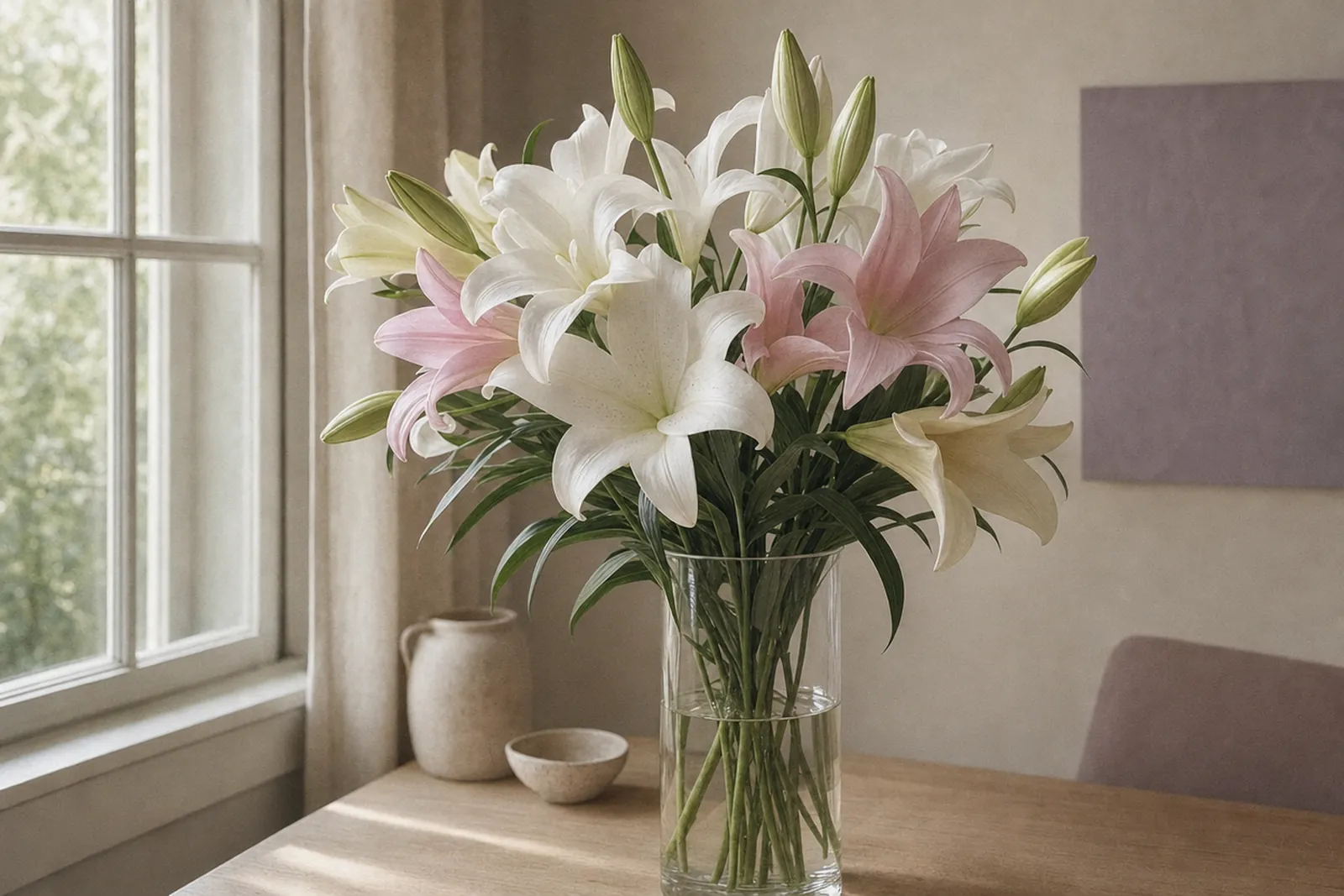
A true lily belongs to the genus Lilium. Each one grows from a scaly bulb and sends up a single upright stem with narrow leaves along its length. The flowers have six petals (strictly, three petals and three sepals that look alike), six stamens tipped with pollen-laden anthers, and a long central style. Wild lilies grow across the cooler parts of the northern hemisphere, from Europe to Asia and North America, and the flowers you see in florists and gardens today are mostly hybrids bred from them.
Several popular plants carry the word lily in their name but are not lilies at all. The calla lily, the peace lily, the arum lily and lily of the valley all belong to different plant families. The daylily (Hemerocallis) is also a separate plant, although it shares one important trait with true lilies: it is dangerous to cats, which we come back to below.
The main lily types
Gardeners and growers sort lilies into groups by their parentage. You do not need to know them all, but a few names come up again and again when buying lily types for a vase or a garden.
- Oriental lilies. The large, wide-open blooms with a strong, sweet scent that most people picture when they think of lilies. Stargazer, with its upward-facing pink and crimson flowers, and the pure white Casa Blanca are well-known Oriental varieties. They flower in late summer in British gardens and are the lilies florists use most.
- Asiatic lilies. Smaller flowers in bright colours, from white and yellow to orange, red and deep maroon. They have little or no scent and flower earlier in summer.
- Longiflorum lilies. Long, white, trumpet-shaped flowers, also called Easter lilies. They have a clean, light fragrance.
- LA hybrids. A cross between Longiflorum and Asiatic lilies, with large flowers, strong stems and a light scent. They are a common cut flower.
- Trumpet and OT hybrids. Tall lilies with big, outward-facing trumpets, often scented in the evening. OT hybrids, crosses of Oriental and Trumpet lilies, can grow taller than a person.
- Martagon lilies. Also called Turk's cap lilies for their small, nodding flowers with petals curled right back. They suit shady gardens and are rarely sold as cut flowers.
Lily colours and what they mean
Lilies come in almost every colour except a true blue. The meanings below are traditional associations from the old language of flowers rather than fixed rules, so choose the colour that feels right for the person.
- White. Purity, peace and remembrance. White lilies are the classic lily for funerals and have long been linked with the idea of the soul at rest. Our guide to white lilies covers their symbolism and the varieties florists use.
- Pink. Love, admiration and compassion. Pink is gentler than red and is often chosen to remember a mum, a nan or a close friend. Read more about pink lilies, from Stargazer to softer shades.
- Yellow. Friendship, warmth and cheer, often chosen to celebrate a bright, sunny personality.
- Orange. Energy and confidence.
- Red and deep crimson. Love and passion.
- Purple. Dignity and respect, a colour often linked with remembrance.
Lily scent: strong, light or none
Scent depends on the type. Oriental lilies are the most fragrant: a few stems can scent a whole room, which many people love and some find too much in a small space. Trumpet lilies are also richly scented, especially in the evening. Longiflorum and LA hybrids have a lighter fragrance, and most Asiatic lilies have almost none.
If the person receiving flowers has hay fever, finds strong smells difficult, or the flowers will stand in a small room, a lightly scented type, or a mixed arrangement where lilies are one flower among several, is the kinder choice.
How long lily flowers last in a vase
Cut lilies are one of the longest-lasting flowers you can buy. A stem usually carries several buds, and they open one after another, so a vase of lilies often looks good for one to two weeks, with new blooms opening as the first ones fade. Lilies are usually sold with most buds still closed, and they open over the next few days in a warm room.
A few simple habits make a real difference:
- Cut 2 to 3cm off each stem at an angle with a clean, sharp knife or scissors before putting them in water.
- Strip any leaves that would sit below the waterline, because they rot and cloud the water.
- Use a clean vase with fresh, cool water and flower food if it came with the flowers.
- Change the water every two days and trim the stems a little each time.
- Keep the vase away from direct sun, radiators and bowls of fruit, which give off a gas that makes flowers age faster.
- Pull off each flower as it fades, so the stem's energy goes to the buds still to open.
Removing the pollen. Lily pollen is rusty orange and stains clothes, tablecloths and skin. As each flower opens, gently pull off the six anthers (the pollen-covered tips of the stamens) with a tissue. It does not harm the flower, and many florists say it helps the bloom last a little longer. If pollen does fall on fabric, do not rub it or wet it: lift it off with sticky tape or brush it away once dry.
Lilies and cats: keep them apart
True lilies (Lilium) and daylilies (Hemerocallis) are highly toxic to cats. Every part of the plant is dangerous, including the leaves, the petals, the pollen and even the water in the vase. A cat that brushes against a lily and then licks pollen off its fur can be poisoned, and lily poisoning can cause kidney failure.
If you have a cat, or are sending flowers to someone who does, it is safest to choose a design without lilies. If you think a cat has touched or eaten any part of a lily, contact a vet straight away, even if the cat seems well: early treatment matters. Calla and peace lilies are not true lilies and do not carry this same kidney risk, though they can still irritate a cat's mouth.
Lilies in funeral tributes
Lilies are one of the flowers our florists use most in funeral tributes. Their size gives a tribute presence, their open shape fills a spray quickly, and their long vase life suits flowers that families often take home after the service. White Oriental lilies are the most traditional choice, and many of our white funeral flowers pair them with white roses.
A few examples of how lilies appear in our designs:
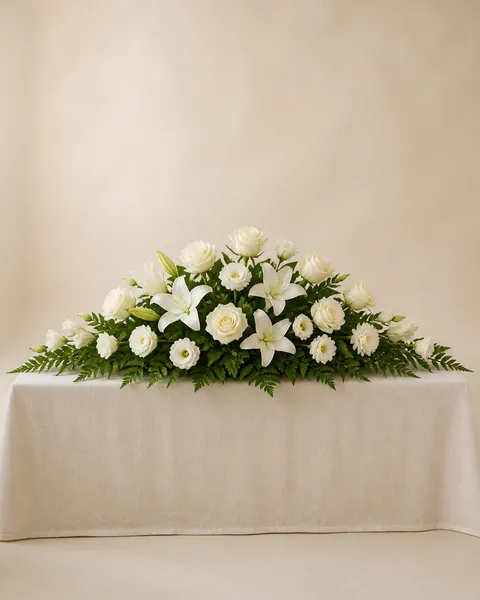
- The White Coffin Spray combines white roses, white lilies, white lisianthus and white spray chrysanthemums in a double-ended spray that rests on the coffin lid.
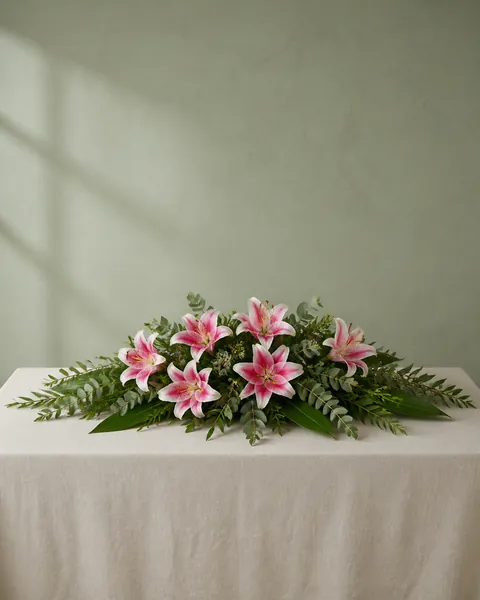
- The Pink Lily Funeral Spray is made entirely of pink Oriental lilies, a single-ended teardrop spray laid on or beside the coffin.
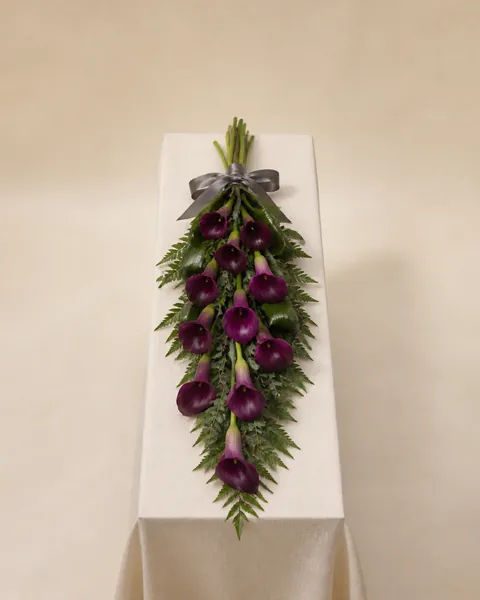
- The Purple Calla Lily Sheaf uses deep purple calla lilies, which, as above, are not true lilies but have a sleek, elegant shape of their own.
- For the family's home in the days after a loss, the Pink Lily and Rose Sympathy Vase arrives as pink Oriental lilies and pink roses in a clear glass vase.
If one flower is not available on the day, the florist may use another of the same colour and style, of equal or greater value. For more ways to choose a tribute, see our funeral flower ideas.
Questions about lilies
Are lilies annual or perennial?
True lilies are perennials. They grow from bulbs that die back in autumn and send up new stems each year, and many types are hardy enough to stay in the ground through a British winter.
Can I sleep in a room with lilies?
Yes, lilies are not harmful to people in the same room. The strong scent of Oriental lilies can bring on a headache or disturb sleep for some people, and the pollen can bother hay fever sufferers, so move the vase to another room if that happens. If you have a cat, keep lilies out of the house altogether.
How do you grow lilies at home?
Plant bulbs in autumn or early spring, about two to three times as deep as the bulb is tall, in well-drained soil or a deep pot of compost. Most lilies like their flowers in the sun and their roots cool. In the UK, watch for the bright red lily beetle, whose larvae can strip the leaves.
What is the rarest colour of lily?
Blue: there is no naturally blue true lily, so any blue lily you see has been dyed. Among real colours, very dark maroon and near-black varieties are among the most unusual.
Can you get white lilies all year round?
Yes. Garden lilies flower in summer, but cut lilies are grown under glass, so white Oriental and Longiflorum lilies are available from florists throughout the year.
Also read: What to Write on Funeral FlowersAlso read: Funeral Flowers IdeasAlso read: How Much Do Funeral Flowers Cost?Also read: Flowers for a CremationAlso read: The White LilyAlso read: The Pink Lily